In this episode, we talk with cognitive neuroscientist Dr. Thomas Christophel about research on working memory, recursive information processing in the brain, and the question of how human thinking can be measured scientifically in the first place.
Episode 3 | Published on May 22, 2026
In this episode, we talk with cognitive neuroscientist Dr. Thomas Christophel about research on working memory, recursive information processing in the brain, and the question of how human thinking can be measured scientifically in the first place.
“If the brain didn’t produce human behavior, I wouldn’t be interested in it. The whole point of neuroscience is to understand human experience and behavior.”
“The human brain, and with it human existence, is a process that has grown over time. I always say: we’re broccoli. We have strange outgrowths, and sometimes a part of us is a bit woody and gnarly.”
“If you know that all of us as humans have inherent prejudices, for example toward strangers, then the conclusion is this: when you interact with a stranger, you make a point of being extra nice.”
This episode’s guest is Dr. Thomas Christophel.
Dr. Thomas Christophel is head of the “Distributed Cognition and Memory” research group at Humboldt University of Berlin, where his research focuses on the foundations of human working memory and its role in cognition.
Here you can find more information about our guest:
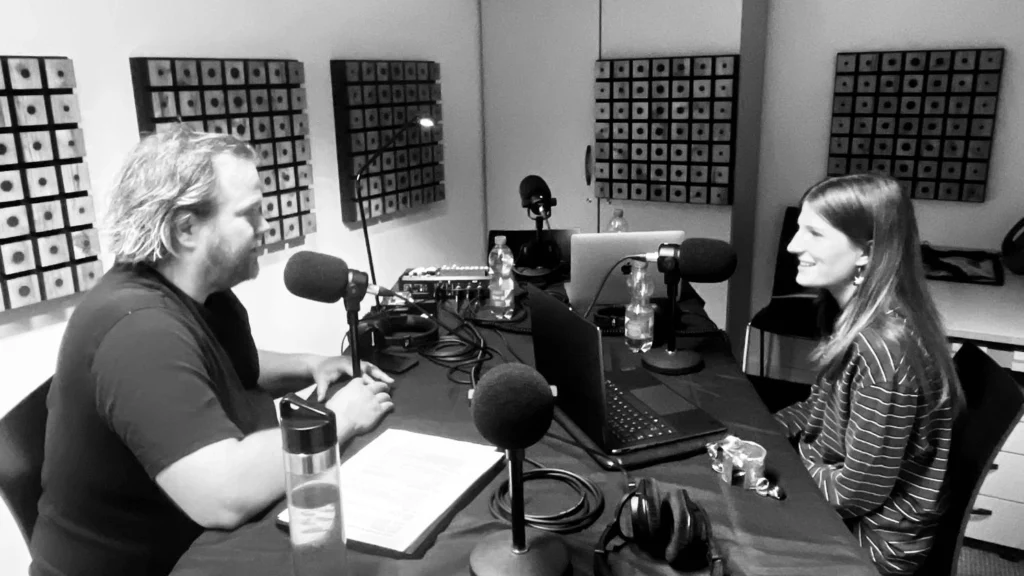
The conversation in this episode is led by the podcast hosts Adriana Gerstner and Malte Cox. This episode is in German.
We would like to thank our guest Dr. Thomas Christophel very much.
Guest
Interview with Dr. Thomas Christophel (May 8, 2026, Menschlich Podcast)
Sources
1. Review article on the topic of “Distributed Cognition”
Christophel, T. B., Klink, P. C., Spitzer, B., Roelfsema, P. R., & Haynes, J.-D. (2017). The Distributed Nature of Working Memory. Trends in Cognitive Sciences, 21(2), 111–124. https://doi.org/10.1016/j.tics.2016.12.007
